Peronie's Disease

Peronie's Disease

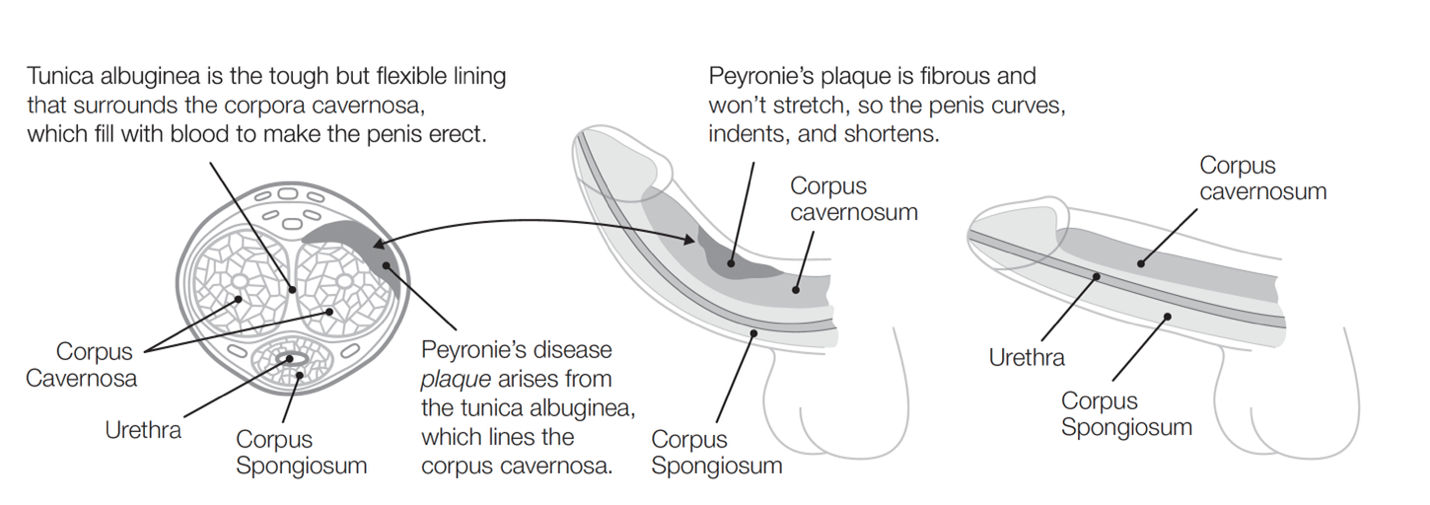
Peyronie's disease is a common condition affecting about 12 percent of men that causes a bend or curve of the erection. It may also cause shortening of the penis as well as weakening of the erection. The underlying cause is scar like tissue that occurs in the shaft of the penis. Sometimes it is due to an injury of the penis, typically during sex, but in many cases it arises spontaneously without a recognizeable injury. While mild cases may not require treatment, Peryonie's can make intimacy difficult and impact confidence. Dr Spitz provides non-surgical treatments for Peyronie's disease to restore function and improve quality of life.

Symptoms

  • Curvature of the Penis: This is the most common symptom. The penis may curve upward, downward, or to one side during an erection.
  • Pain: Pain can occur with or without an erection.
  • Lumps: Lumps or hard areas (plaques) may be felt under the skin of the penis.
  • Shortened Penis: Some men experience a noticeable shortening of the penis.
  • Erectile Dysfunction: Difficulty achieving or maintaining an erection may occur.
  • Psychological Impact: The condition can cause emotional distress, anxiety, and decreased self-confidence.

What's Happening Down There?

Peyronie's is an area of disorganized collagen within the shaft of the penis which is called a “plaque”. It is not the same as plaque in diseased blood vessels or plaque on the teeth. It is comprised of collagen and sometimes calcium deposits and it arises from the lining of the two cylindrical chambers of the penis that fill with blood and that elongate and widen during an erection.
Causes and Risk Factors

  • Trauma or Injury: Damage to the penis usually during intercourse but occasionally as a result of blunt force trauma.
  • Genetic Factors: It occurs more commonly in men with a family history of Peyronie's disease or related connective tissue disorders knows as dupuytren's contractures.
  • Age: Risk increases with age and it arises most commonly starting in the late 40s. For the majority of men, it arises spontaneously without a recognized injury.

Contact Us

Diagnosis

Diagnosis typically involves:

  • Physical Examination: examination of the penis when it is soft to evaluate for “plaque” tissue. In many cases examination of the penis in the erect state is conducted to assess the location of the plaque more precisely for treatment planning. This is accomplished with the aid of a small injection delivered into the side of the penis which induces a temporary erection.
  • Ultrasound: examination to visualize the plaque tissue, assess its thickness and assess if it has become calcified.

Treatment Options

Treatment depends on the severity of symptoms:

  • Observation: In a little over 10% of cases, the condition reverses on its own within a year or two. Mild cases without significant pain or curvature may not require immediate treatment.
  • Mechanical Stretching
    • Restorex is a mechanical traction device for the penis that can gradually stretch the collagen plaque and provide straightening and lengthening. It is worn on the penis while the penis is soft for 30 minutes twice a day. Improvement mahy occur over a few months of use and use of the Restorex alone may be sufficient to cure the condition in about 10% of men. In most cases Restorex must be used in combination with injections to allow significant improvement. The Restorex device can be obtained through Dr. Spitz's office.
  • Injection Therapy
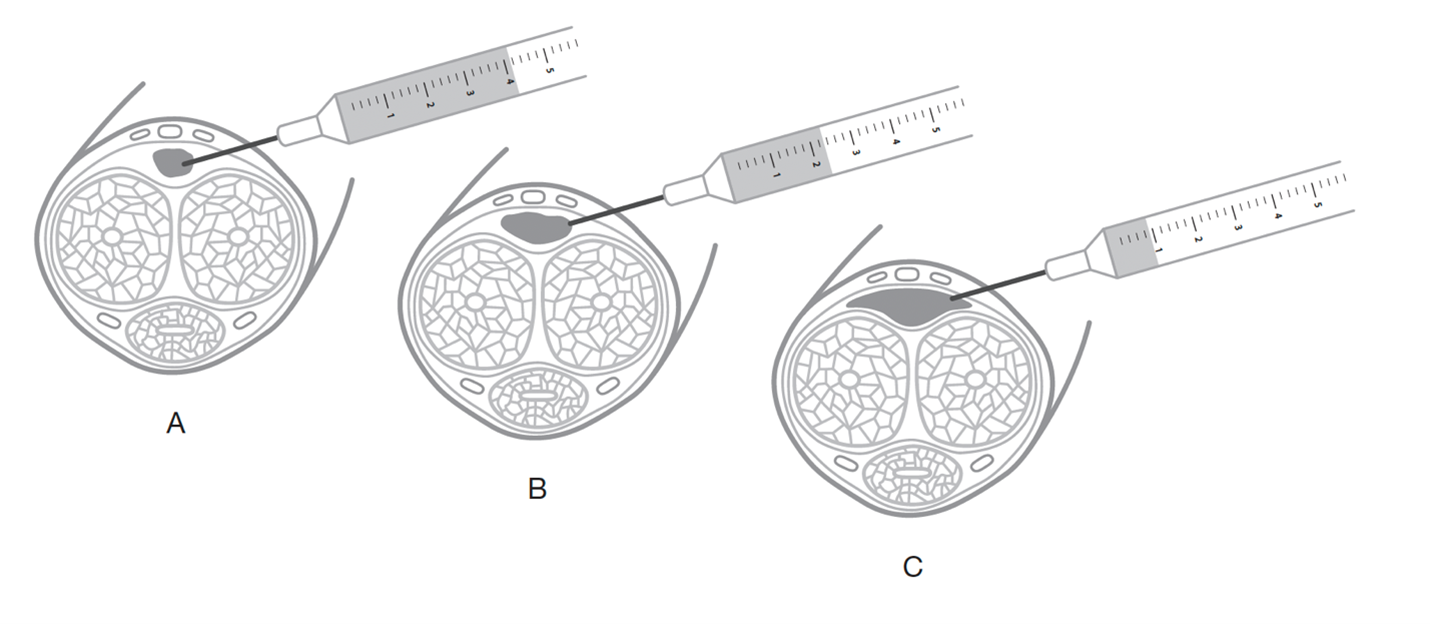
    • Xiaflex: an injection that contains collagenase which is an enzyme that breaks down collagen. It is injected directly into the plaque over a series of several injections. It gradually softens and thins the plaque allowing gradual straightening and lengthening. It can cause significant bruising and swelling so abstinence from sexual activity is required for a period of a few weeks following each injection. Most men require several injections occurring over a period of several months. It is effective in at least 80% of men who are treated. Mechanical traction is continued along with the injections. Not all peyronie's plaques are well suited for this injection therapy.
    • Verapamil Injections: This medication may be administered for men who are not good candidates for Xiaflex injections. These injections counteract fibrous tissue formation through a different mechanism that Xiaflex. These injections also result in gradual improvements requiring several injections over a few to several months. The swelling and bruising is less intense than with Xiaflex and sexual abstinence is not required. It is effective in at least 70% of men who are treated. Mechanical traction is continued along with the injections.
  • Oral Medications
    • Pentoxyfiline: This medication is taken daily with meals for a few months. It may decrease the progression of the condition but does not reverse it. It has limited effectiveness but may be recommended in addition to mechanical traction and injections.
  • Surgery: Surgery is reserved for cases where there has been no changes in the curvature for over a year. It may be the best solution for severe cases that cannot be improved sufficiently with injection therapy. Surgery may be the best option for men who also have erectile dysfunction that cannot be improved with medication. Surgery is also a good option for men who want a single intervention rather than the multiple injections and several months of use of mechanical traction required for non surgical treatment. Dr Spitz refers men who require or prefer surgical correction to a surgical reconstructive specialist within his practice.
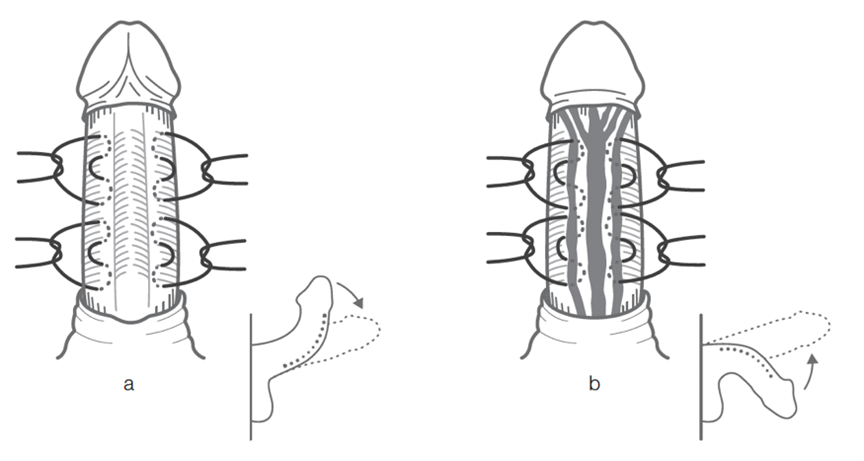
    • Plication Surgery: Stiches that are placed to shorten the side opposite the curve allowing the erection to be straight.
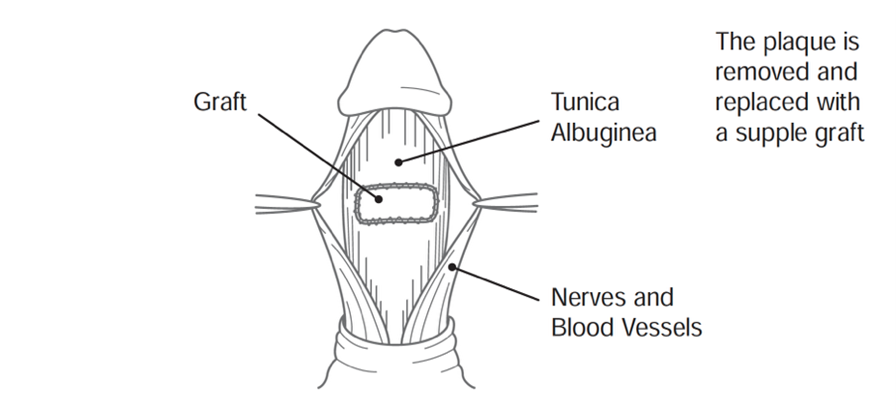
    • Grafting: Removes scar tissue and grafts new tissue to straighten the penis.
    • Penile Implants: For men with both Peyronie's disease and severe erectile dysfunction.

Ready?

Contact the office of Dr Aaron Spitz to schedule evaluation and treatment of Peyronie's.

Contact Us

We are here to answer all of your questions, ease your concerns, and talk about your treatment options.

Success! Your message has been sent to us.
Error! There was an error sending your message.